DON’T LET YOUR 80% NEBULIZATION MIST TURNS INTO WASTE
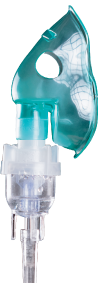
CONVENTIONAL
NEBULIZER
For more details
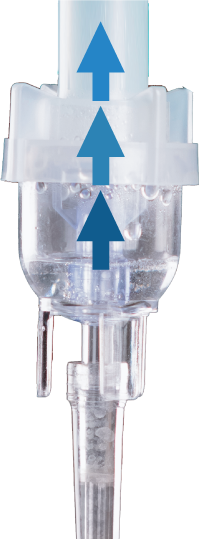
Do you know approximately 80% of the nebulizer mist do not reach the lungs?
Local Side Effects When Nebulizer Particles
Deposit At Upper Respiratory Tract
Inhaled particles which do not reach the lungs lead to the loss of pharmacological effect or provoking unwanted systemic side effects
Inhaled corticosteroid accumulating in the oropharnyx can result in the risk of dysphonia (disorder of voice) and oral thrush (yeast infection of the mouth).
Deposited particles at upper respiratory system will be removed by lung mucocilliary clearance (a natural lung defense mechanism) to deliver to oropharnyx, where the particles will be swallowed or expectorated.
Introducing
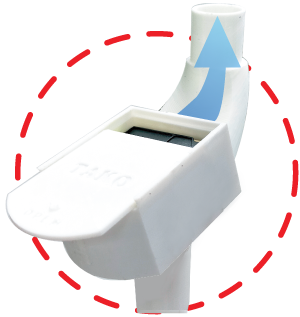
Zap-Air™ Micronizer
Convert
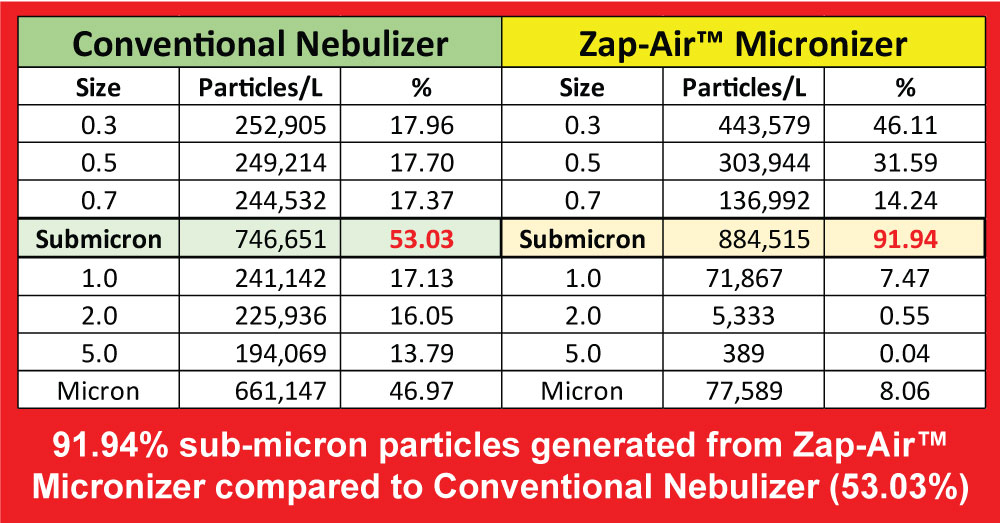
converts micron-size mist
into sub-micron vapour
Add on Zap-Air™
Micronizer
Finer Mist
Easier Absorption by Our Lungs
More Comfortable to Patients
It is a simple air blower (with curved nozzle) that helps to split the incoming nebulizer mist into smaller particles, filter off its big particles and leaves the nozzle with mostly sub-micron size nebulization mist
PARTICLE SIZE COMPARISON CHART
Drug Particles :
Larger than 5µm:
2µm - 5µm:
Smaller than 2µm:
Deposit on the upper respiratory tract, limiting the amount of drug particles reaching the lung.
Moderate size primarily deposit on the central and small airways.
Predominantly deposit on the alveolar sacs.
Sub-micronized formulation will be deposited into deep lung tissues during pulmonary drug delivery.
Sub-micronized
particles is a fast and cost-effective answer in increasing the exposure of poorly soluble oral drug by increasing surface area and thereby improving dissolution rate.
Please Watch the Video to See the Difference Between Visible Mist and Invisible Mist
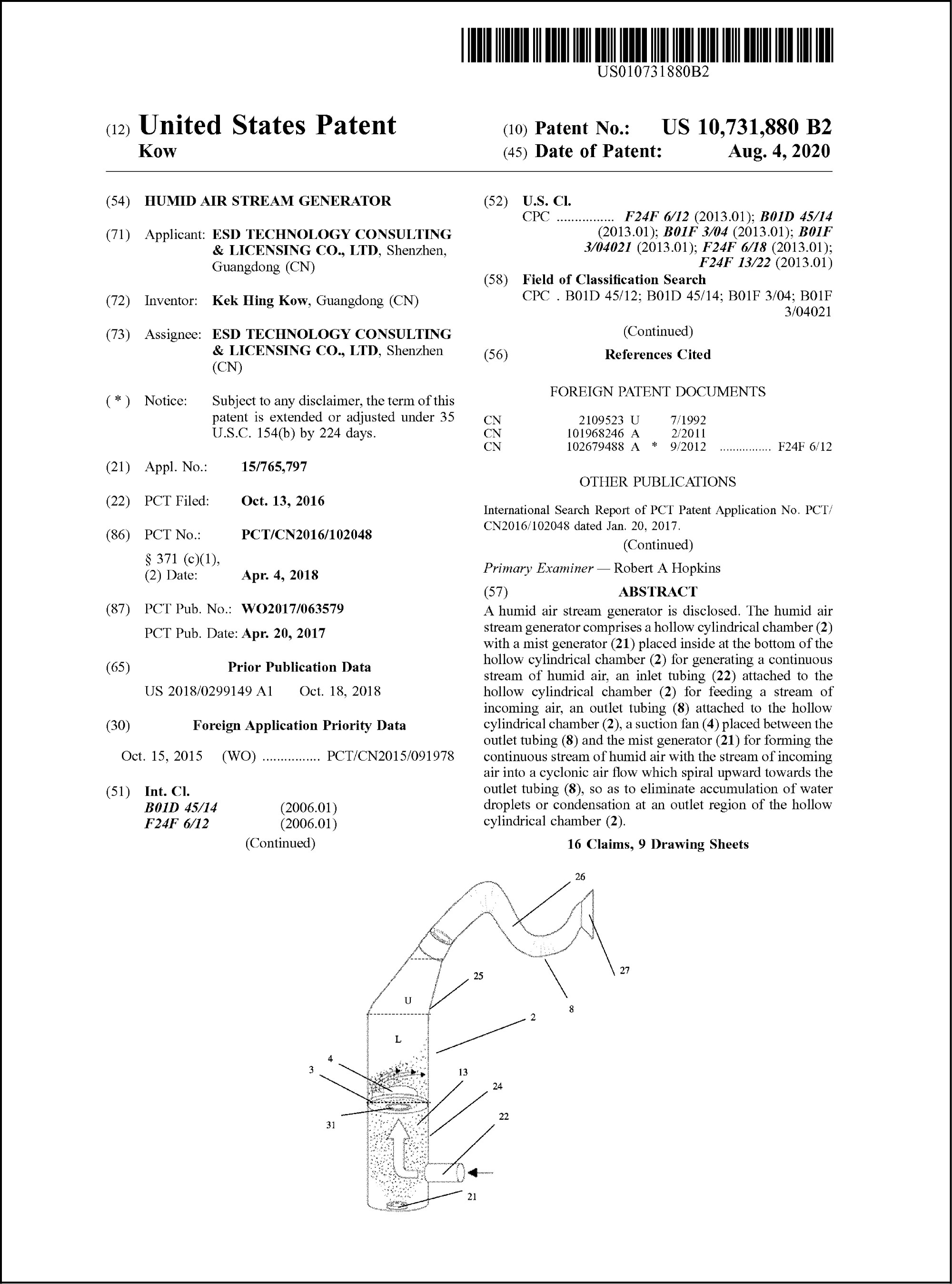
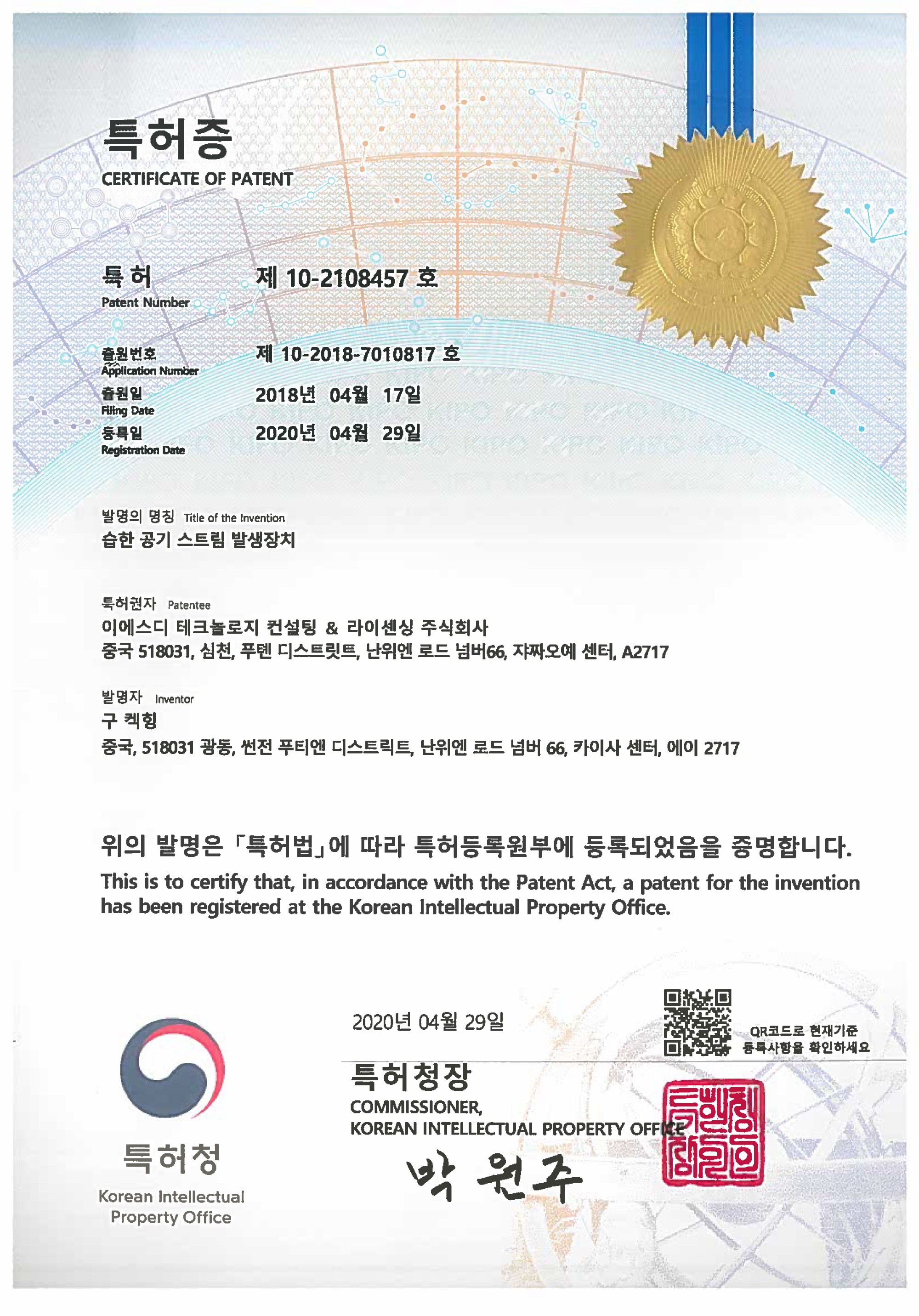
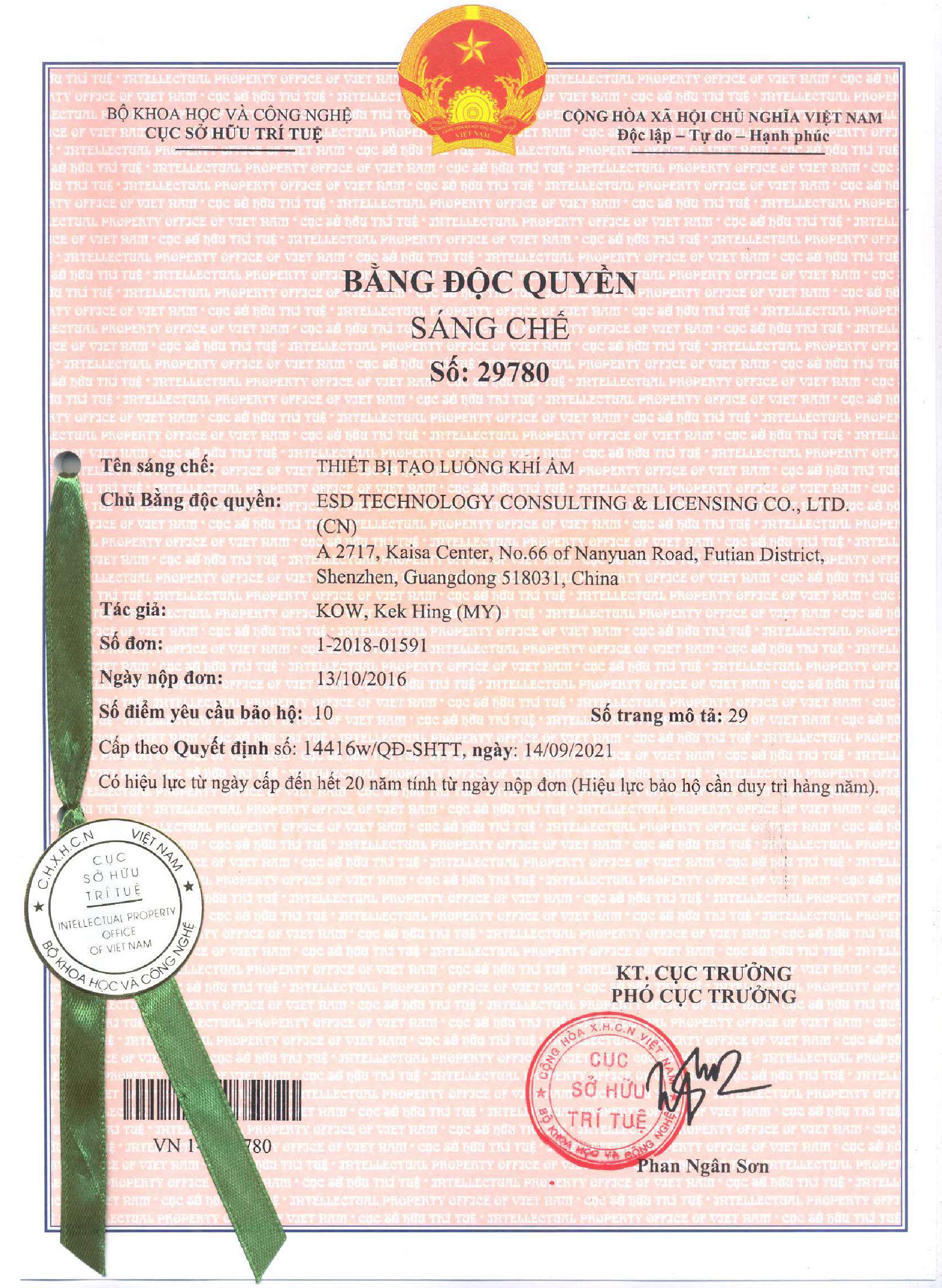
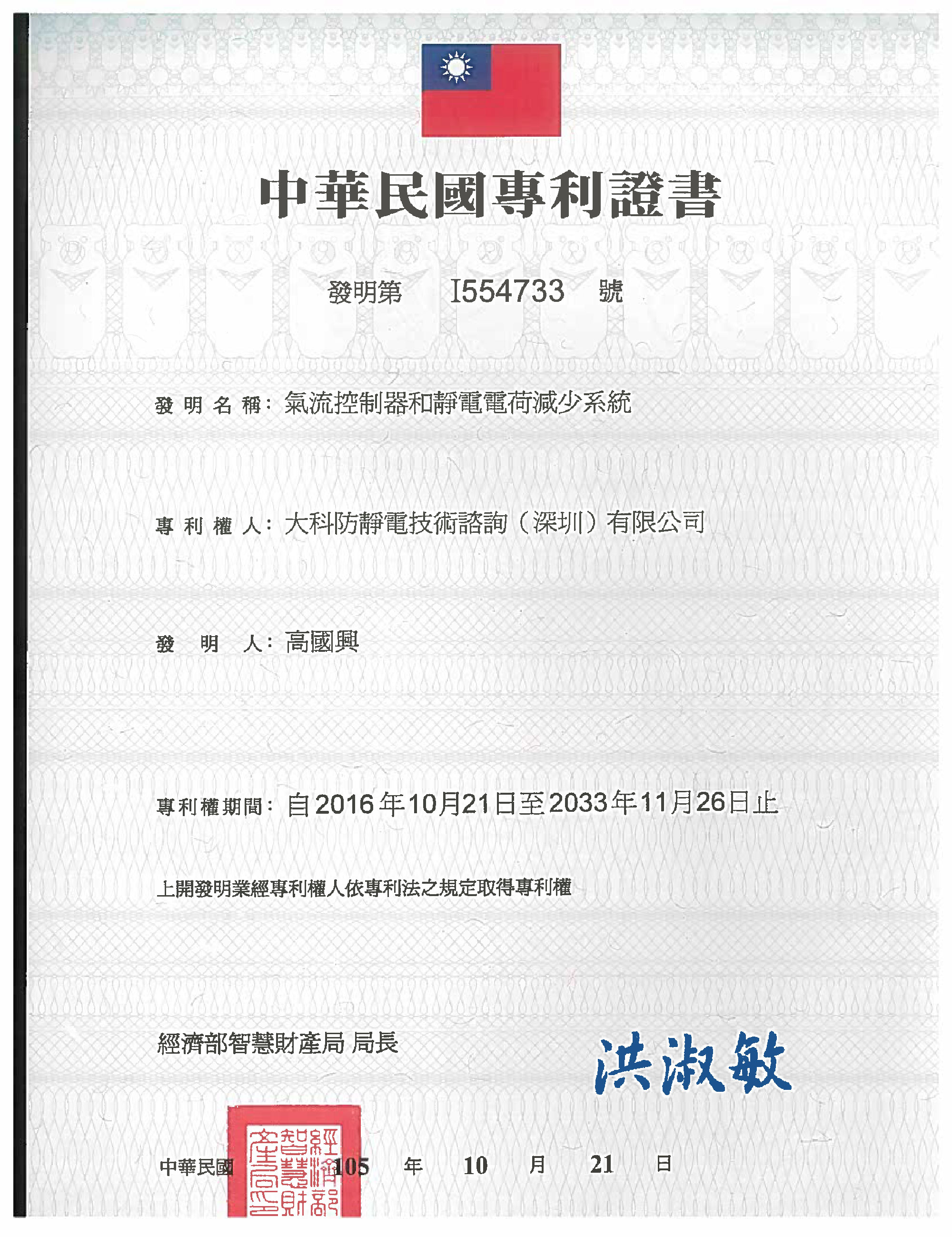
Zap-Air™ Micronizer is granted with Invention Patents from